
What Is Agentic AI Orchestration? An Enterprise Guide
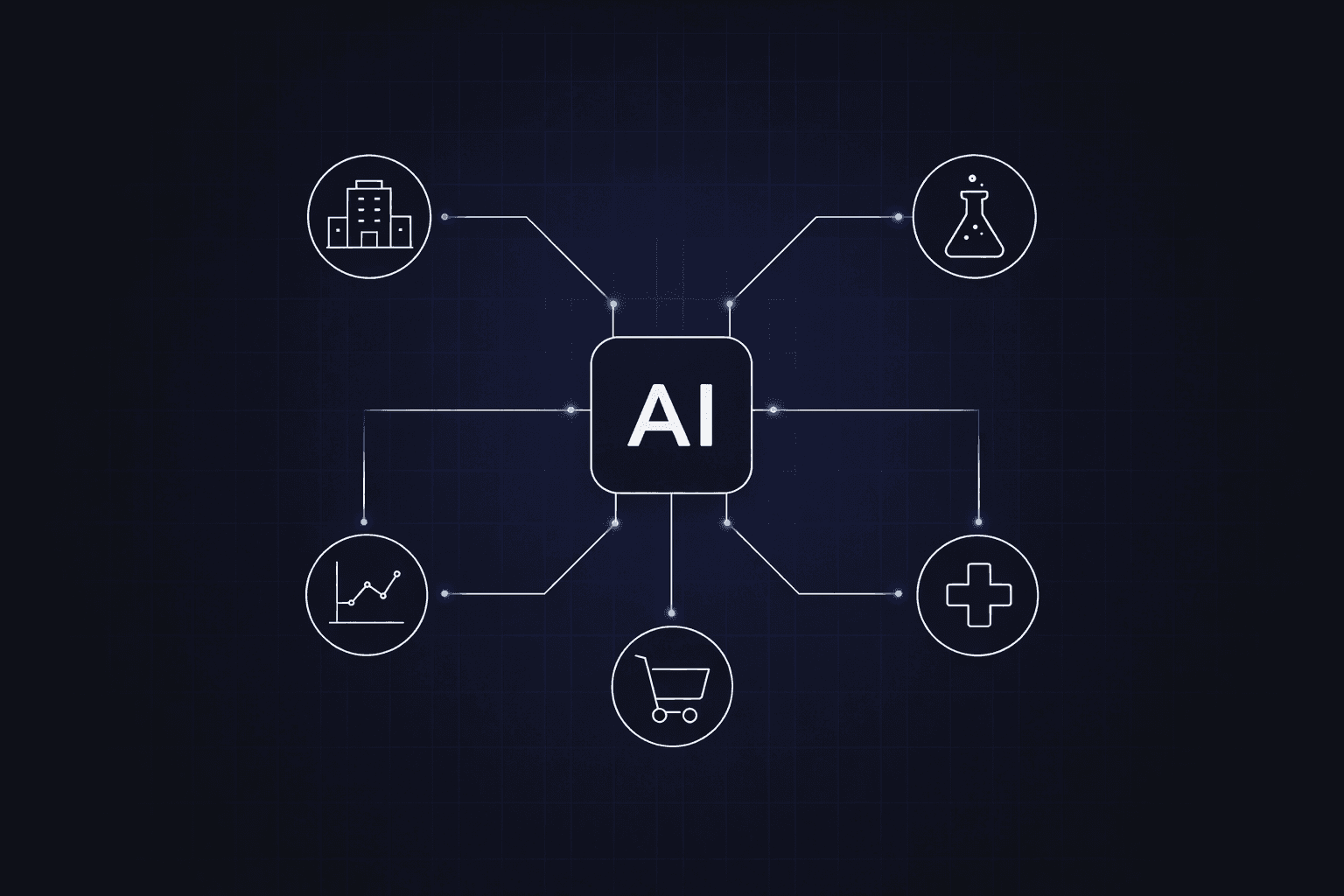
Let’s say your organization has deployed AI agents across IT service management (ITSM), procurement, finance, and customer service. Each one connects to production data, makes decisions, and takes actions inside your systems of record. But no single layer governs what those agents can access, how they make decisions, or whether their outputs stay within policy.
Agentic AI orchestration is the architecture that brings those agents, the business rules that govern them, and the humans who approve high-stakes decisions into a single governed workflow. Without it, each new agent deployment adds cost, risk, and audit exposure that compounds faster than your governance team can track.
What Agentic AI Orchestration Means
Agentic AI orchestration is a coordination framework for deploying, governing, and executing multiple specialized AI agents inside enterprise workflows. It handles task delegation, parallel execution, state management, and failure recovery within defined operating boundaries.
Three distinctions help separate orchestration from adjacent concepts.
- Orchestration vs. agent chaining: Agent chaining handles sequential task progression. Orchestration covers a broader scope, including parallel execution, hierarchical coordination, and runtime routing based on context.
- Orchestration vs. agent-to-agent communication: Agent-to-agent (A2A) communication means agents exchange information directly. Orchestration is the control layer around the interaction. It manages state, applies policy, preserves audit records, and coordinates exception handling.
- Orchestration vs. workflow automation: Traditional workflow automation is usually predefined and deterministic. Agent-based systems introduce probabilistic reasoning, which means the same goal can produce different outputs depending on context. Probabilistic reasoning helps with tasks like reading unstructured documents or classifying text. Enterprise processes still need deterministic guardrails around approvals, payments, and system updates.
A Forrester evaluation of adaptive process orchestration describes a related category separate from robotic process automation (RPA) and digital process automation. The exact market boundaries still vary by vendor, but the category signal is useful for understanding how the space is evolving.
Why Direct Agent Coordination Struggles at Enterprise Scale
Direct coordination between agents can work in contained scenarios. In larger environments, four categories of risk compound as transaction volume and integration complexity grow.
The first is reliability. Each handoff between agents creates another chance for context loss, tool failure, or incorrect reasoning. A multi-agent benchmark that tested several agentic architectures across multiple large language models reported weak pass-at-k results, meaning the systems did not succeed consistently across repeated tries. The architectural lesson is that compounding handoffs degrade reliability faster than most teams expect.
That reliability problem also drives cost. When agents communicate through natural-language prompts instead of structured APIs, each handoff serializes context into tokens. Failed interactions still consume tokens, and debugging often requires preserving the full conversation history. Token-level costs are one reason many enterprise teams separate reasoning from deterministic execution and reserve model calls for steps that genuinely need them.
Cost and reliability issues would be manageable if teams could trace failures quickly, but observability breaks down too. Standard tracing tools like OpenTelemetry and Jaeger were built for deterministic service calls with clear causality. Multi-agent systems branch differently for similar inputs, so root-cause analysis often means inspecting prompt histories and decision sequences instead of reviewing structured logs.
All three problems feed into the fourth: governance gaps. In regulated environments, teams need traceability, decision attribution, and policy checkpoints. In some cases, human review before critical actions is required before execution. Without an orchestration layer, enforcing those controls consistently across agents is much harder. A multi-agent governance guide describes additional risks, including emergent behavior, credential leakage, and cascading failures.
These risks reinforce why direct agent coordination tends to break down as transaction volume and integration complexity increase.
The Enterprise Pattern for Agentic AI Orchestration
In many production environments, teams separate orchestration, agent reasoning, and tool execution into distinct layers. Separating the layers improves reliability, cost control, and governance because each layer has a defined responsibility.
Each layer handles a different type of work, and the boundaries between them are what keep the system auditable and recoverable:
- Layer one, deterministic orchestration: This layer owns workflow state, execution sequencing, routing logic, and error recovery. The workflow defines which step comes next under which conditions. Workflow state keeps long-running enterprise processes auditable and recoverable when exceptions occur.
- Layer two, bounded agent execution: Agents operate within policies and constraints set by the workflow. They can reason inside a limited context, but they do not independently redesign the process or bypass controls. Because agents are probabilistic, errors are still possible. A bounded scope contains the impact of those errors to a defined step rather than letting them propagate across the workflow.
- Layer three, deterministic tool execution: API calls, database writes, calculations, and record updates should run through deterministic tools. Large language models can assist with reasoning and interpretation, but structured operations are usually better handled by code and systems designed for precision. The most expensive errors in enterprise workflows usually happen when a non-deterministic step is allowed to trigger a precise business action without checks.
Three additional capabilities separate enterprise-grade orchestration from lighter-weight implementations:
- Human-in-the-loop thresholds: High-confidence cases can be routed automatically, while low-confidence cases go to a person for review. For irreversible actions, the agent output should often be a recommendation or draft request rather than direct execution. Without explicit thresholds, one misclassified edge case can trigger a large number of unchecked actions before anyone intervenes.
- Model-agnostic design: Models change quickly. A model-agnostic orchestration layer lets you swap models based on cost, quality, or availability without rebuilding the workflow itself. Model flexibility reduces lock-in and helps you adapt when model pricing, performance, or governance requirements change.
- Standardized process notation: In regulated environments, standardized notation such as Business Process Model and Notation (BPMN), a standard for mapping workflow steps, and Decision Model and Notation (DMN), a standard for documenting decision logic, can make workflow definitions easier to audit and review with compliance teams. Shared notation reduces ambiguity during audits and shortens the gap between process design and policy review.
Human-in-the-loop controls, model flexibility, and auditable process notation are the capabilities that make orchestration production-ready for regulated environments.
Where Agentic AI Orchestration Is Showing Results
The clearest fit tends to appear in workflows that cross multiple systems, generate high transaction volume, and still require explicit decision rules. In those environments, orchestration helps teams separate adaptive reasoning from the steps that need consistency and auditability.
Four domains stand out as strong fits for agentic AI orchestration:
- ITSM: ITSM workflows combine incidents, requests, approvals, routing, and knowledge retrieval across several systems. The work already has defined states, service levels, and escalation paths, which makes ITSM a practical fit for orchestration.
- Finance operations: Finance workflows often combine document interpretation with exception handling and approval controls. The combination of interpretation and controls makes deterministic orchestration useful because the process can use AI where interpretation is needed without loosening controls on payments, posting, or record updates.
- Customer service: Customer service workflows benefit when orchestration connects agents, knowledge sources, customer relationship management (CRM) data, and escalation paths. The gain usually comes from routing the right case to the right handling path while preserving service history and review checkpoints.
- Procurement: Procurement teams are applying AI-driven workflows to purchase requests, supplier communication, and approval routing. The value usually comes from reducing manual handoffs across enterprise resource planning (ERP), sourcing, and intake systems while keeping review policies intact.
Across all four domains, the gains come from redesigning workflows with governance built in from the start.
How Elementum Applies Agentic AI Orchestration
Elementum's AI Workflow Orchestration Platform and AI Agent Orchestration implement deterministic orchestration, bounded agent execution, and governed tool access as distinct layers.
Elementum treats humans, business rules, and AI agents as equal first-class actors in each workflow. Our Workflow Engine provides the deterministic backbone so the same process produces the same result every time. AI agents handle interpretation and reasoning at specific steps, such as document processing, data analysis, and classification. Deterministic rules handle the steps that require consistency and control. Elementum's internal analysis shows that routing every workflow step through a large language model costs significantly more than reserving model calls for steps that require reasoning, and the gap widens at enterprise transaction volumes.
Elementum is pre-integrated with OpenAI, Gemini, Anthropic, Amazon Bedrock, and Snowflake Cortex. Teams can swap models, use multiple models in a single workflow, and route tasks to the most appropriate model without redesigning the process.
Elementum's patented Zero Persistence architecture is built around a clear data-sovereignty promise. Elementum will never train on your data, replicate it, or warehouse it. CloudLinks connect to data systems in real time where the data already lives, including Snowflake, BigQuery, Redshift, and Databricks, without replication. Access to enterprise systems such as SAP, Salesforce, and Oracle is handled separately through native integrations and APIs. Elementum also runs in existing cloud environments such as AWS and Azure.
Production deployment typically takes 30 to 60 days for workflows that connect to existing systems without a large migration project. Elementum helps build the first workflow, then your team can extend and maintain workflows through a no-code, drag-and-drop builder without a permanent vendor engineering dependency.
How to Evaluate Agentic AI Orchestration in Your Enterprise
If you're building the business case now, evaluate orchestration as a complete operating model for AI adoption. The core question is whether the architecture gives you control over workflows, data, and decisions as adoption expands.
Start with four checks:
- Workflow control: Can the system maintain state across long-running processes and define deterministic execution paths?
- Agent boundaries: Are agents used for reasoning steps only, with clear limits on what they can access and execute?
- Human oversight: Can you set confidence thresholds, approval routes, and revocation points for high-risk actions?
- Data sovereignty: Does the vendor keep data in your environment without training on it, replicating it, or warehousing it?
Done together, the four checks show whether the architecture can scale without losing control. If the answers are weak, expanding AI agents will usually increase risk faster than measurable value.
Scale Agentic AI Orchestration with Elementum
Enterprise value comes from orchestrated workflows with governance built into every step. If you want board-level ROI, auditability, and cost control, agentic AI orchestration needs a deterministic operating layer around bounded AI capabilities.
Elementum puts orchestrated governance into practice with our Workflow Engine and Zero Persistence architecture. You can keep data in your environment, apply human and policy controls at the workflow level, and adopt new models without rebuilding the business process.
Contact us today to scope your AI orchestration use cases.
FAQs About Agentic AI Orchestration
How is Agentic AI Orchestration Different From RPA?
RPA automates repetitive interface-level tasks such as copying fields or filling forms. Agentic AI orchestration coordinates agents, rules, systems, and people across an end-to-end workflow, with governance around each decision point.
When Do You Need Multi-agent Orchestration?
Use multi-agent orchestration when a workflow spans multiple systems or requires different types of reasoning at different steps. If one bounded agent can complete the task safely, starting with a simpler design is usually better.
What is the Biggest Risk of Skipping Orchestration?
You get agent sprawl without consistent controls. Agent sprawl usually shows up as inconsistent outcomes, weak auditability, unclear ownership of decisions, higher token costs, and limited visibility into what agents are doing in production.
How Long Does Enterprise Deployment Usually Take?
Timelines vary by integration scope and process complexity. Elementum typically deploys production workflows in 30 to 60 days when connecting to existing systems without a large migration project.
What Should You Validate Before Choosing a Vendor?
Check model flexibility, workflow state management, human approval controls, and data-sovereignty terms. Also, verify how the product separates data connectivity from enterprise-system integrations so architecture and governance stay clear.